
-
Author/artistJuan Parra Cancino
-
Publication year2018
-
Date20 Apr 2018
-
Publishing houseOrpheus Instituut
-
ClusterMetamusicX, Music, Thought and Technology
-
SeriesOrpheus Institute Series
-
SubtypeLP
-
ISSN5425035400024
-
Price€ 20
Vinyl and 16-pages booklet with essays
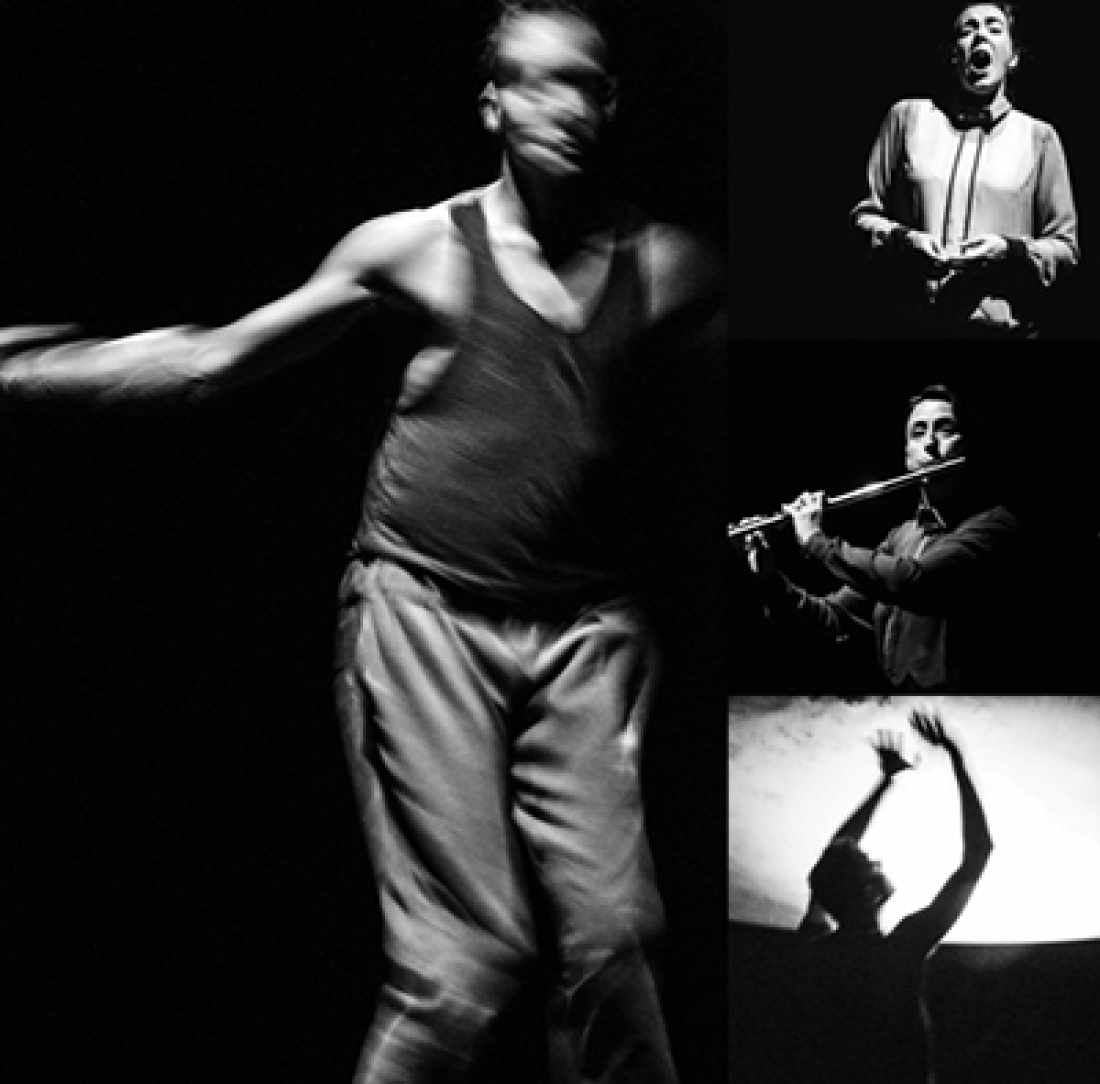
At the end of 2014, Italian theatre group Muta Imago and the Belgian HERMESensemble invited Juan Parra Cancino to join them in revisiting Hyperion. Together they devised a way to adapt Maderna’s score by dismantling the theatrical and musical elements of the original and reducing them to their essential components as a new music theatre production. In this Hyperion project electronic media replaced the orchestra, in part to make the orchestral body a tangible presence in the theatrical work, enabling it to interact with the onstage musicians, actor, and other visual elements of the production.
The new acousmatic version of Maderna’s Hyperion documented in this release embraces Hyperion’s remarkable legacy as a work with no fixed form, which allows it to keep branching out into new possibilities, new intensities, and new musical renderings. In it, Parra Cancino also continues his exploration into processes of dismantling and replacing and into the incorporation of “time” in his transcription—an “explosive compression” that can itself constitute a musical object—in this case, a recording released as an LP. The extreme dynamic range of the mix encourages listeners to adjust levels along the way, and, over time, the degradation of the medium will potentially render certain parts of the work inaudible. Furthermore, the use of locked grooves at the end of each side requires listeners to regulate time by acting on the object itself. The release also includes six new essays by participants and scholars that reveal the historical, artistic, and theoretical background to the music and the project.
Credits
Music by Bruno Maderna and Juan Parra Cancino
Flute: Karin de Fleyt
Soprano: Valerie Vervoort
Musical arrangements and electronics: Juan Parra Cancino

With support from
The research leading to these results has received funding from the European Research Council under the European Union's Seventh Framework Programme (FP7/2007-2013) / ERC grant agreement n° 313419.


Orpheus Institute Series
This series of peer-reviewed publications —launched in 2013— encompasses monographs by Research Fellows and associates of the Orpheus Institute, compilations of lectures, texts, and performances from seminars and study days, and edited volumes on topics arising from work at the institute. Research can be presented in digital media as well as printed texts. As a whole, the series is meant to enhance and advance discourse in the field of artistic research in music and to generate future work in this emerging and vital area of study.

