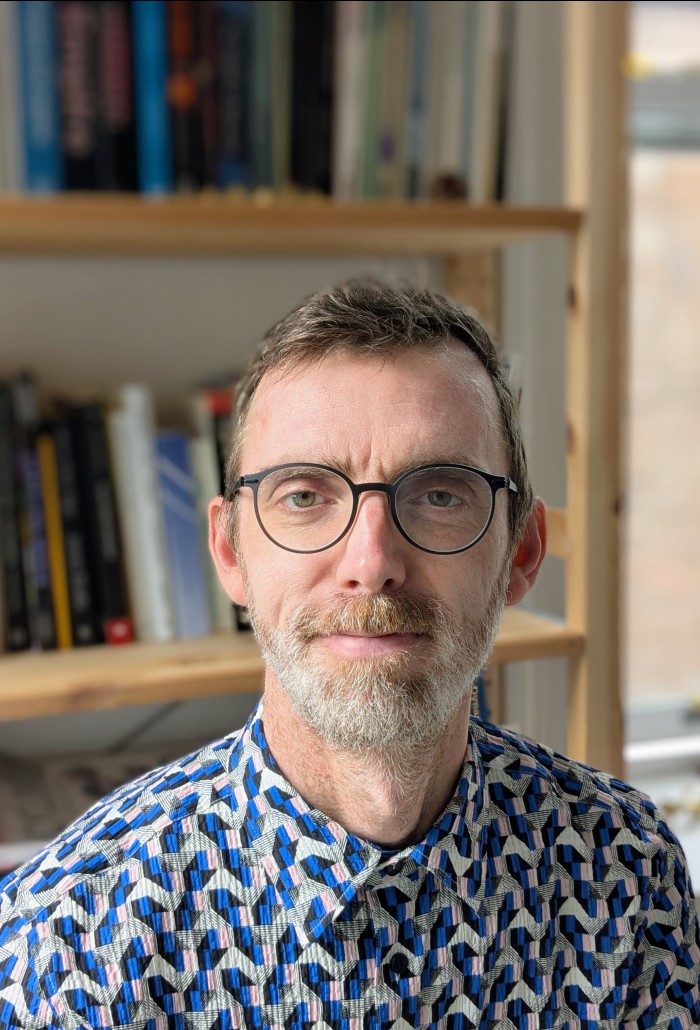
Orpheus Instituut welcomes Martin Zeilinger as Senior Research Fellow
Nieuws 23 februari 2026Orpheus Instituut is pleased to welcome Martin Zeilinger as Senior Research Fellow within Posthuman Music, the project led by Paulo de Assis and awarded an Advanced Grant by the European Research Council in 2025.
Posthuman Music investigates how emerging technologies such as artificial intelligence and blockchain are reshaping musical creation, performance, and composition. Bringing together theoretical inquiry and practice-based experimentation, the project explores the ontological, conceptual, and artistic implications of these technologies for contemporary music-making.
Martin Zeilinger joins Orpheus Instituut from Abertay University, where he serves as Reader in Computational Arts and Technology. His research focuses on artistic and critical engagements with emerging technologies, including AI, blockchain, and videogame media, and is grounded in broader interests in digital art, permacomputing, posthumanism, distributed agency, and critical perspectives on cultural ownership and intellectual property.
As part of the Posthuman Music project, Martin will continue researching the role technology plays in distributing expressive agency between human and non-human actors.
In particular, he is curious about how such distribution manifests in improvisational performance practices, and in art practices that resist intellectual property enclosures.
His expertise closely aligns with the interdisciplinary research strands of Posthuman Music, which range from examining the conceptual consequences of AI and blockchain for music to developing new compositional tools, digital media frameworks, and experimental creative practices. The project will generate a wide range of outputs, including scholarly publications, artistic works, digital performances, experimental toolkits, and an online platform.
In Posthuman Music. Creative practices after AI and blockchain, Martin will lead Research Strand 2, titled “Decentralised Creativity and Algorithmic Agency.” His work at Orpheus Instituut over the coming five years will help strengthen our engagement with critical media theory and artistic experimentation at the intersection of music, technology, and society.